Gas Exchange
The Vital Process of Gas Exchange
Gas exchange is a crucial function of the cardiovascular system, involving the transfer of oxygen and carbon dioxide between blood and tissues. This process occurs in two main locations: the lungs (external respiration) and the body tissues (internal respiration).
The heart plays a central role by pumping blood to and from these sites, ensuring efficient gas exchange throughout the body. This continuous process is essential for cellular respiration and maintaining life.
The Exchange Process
In the lungs, oxygen from inhaled air diffuses into the bloodstream through tiny air sacs called alveoli, while carbon dioxide moves from the blood into the lungs to be exhaled. This oxygenated blood then travels to the heart's left chambers before being pumped throughout the body.
At the tissue level, oxygen leaves the blood and enters cells through capillaries, while carbon dioxide produced by cellular respiration moves from the cells into the blood. This deoxygenated blood returns to the heart's right chambers before being pumped back to the lungs.
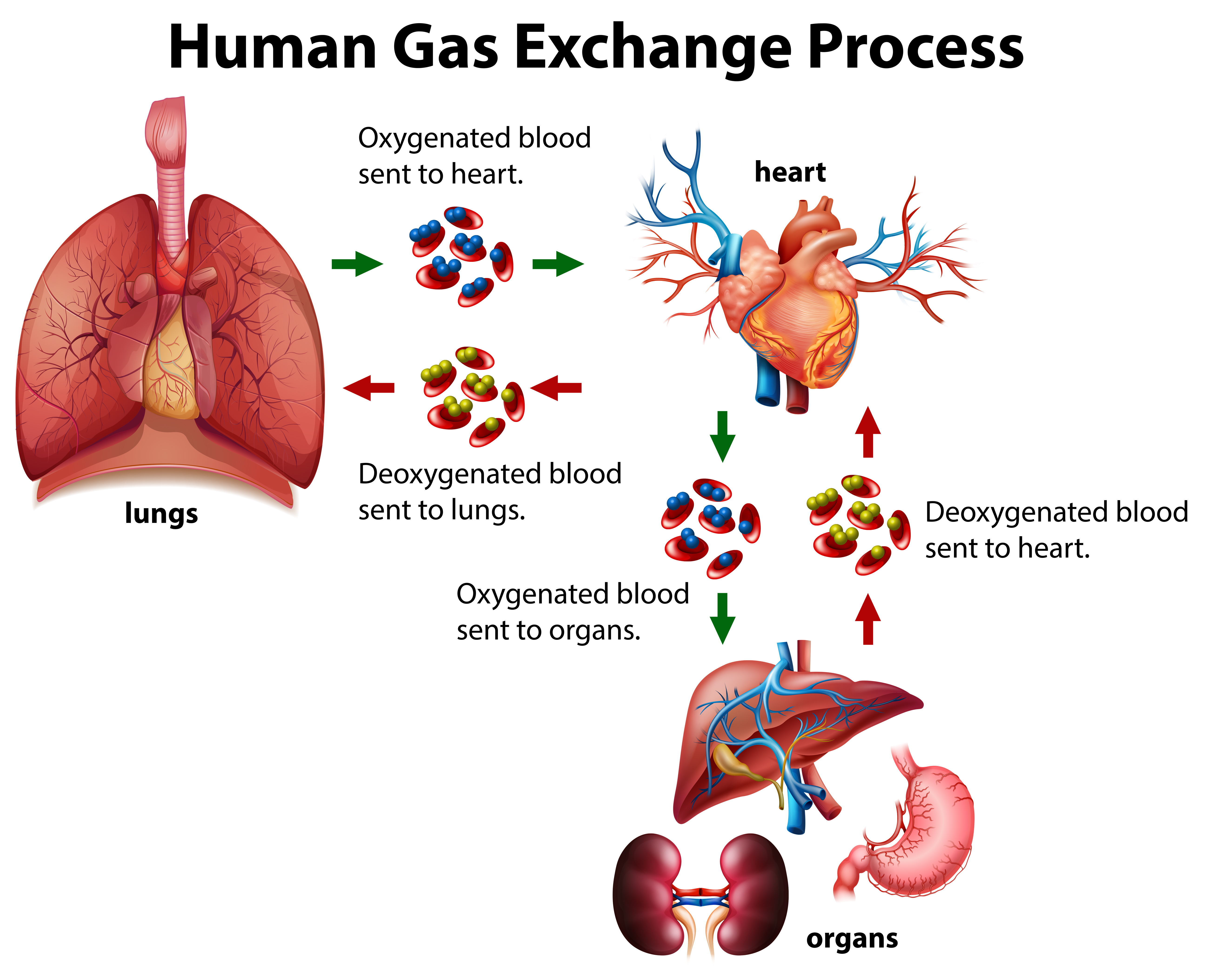
Gas Exchange System
The intricate process of oxygen and carbon dioxide exchange between blood vessels and tissues.
Maintaining Efficient Gas Exchange
Several factors affect the efficiency of gas exchange, including blood flow rate, oxygen concentration in the air, and the health of lung tissue. Regular exercise can improve gas exchange efficiency by increasing lung capacity and strengthening the heart.
Various medical conditions can impair gas exchange, including lung diseases, heart conditions, and blood disorders. Understanding these processes helps healthcare providers diagnose and treat respiratory and circulatory problems effectively.